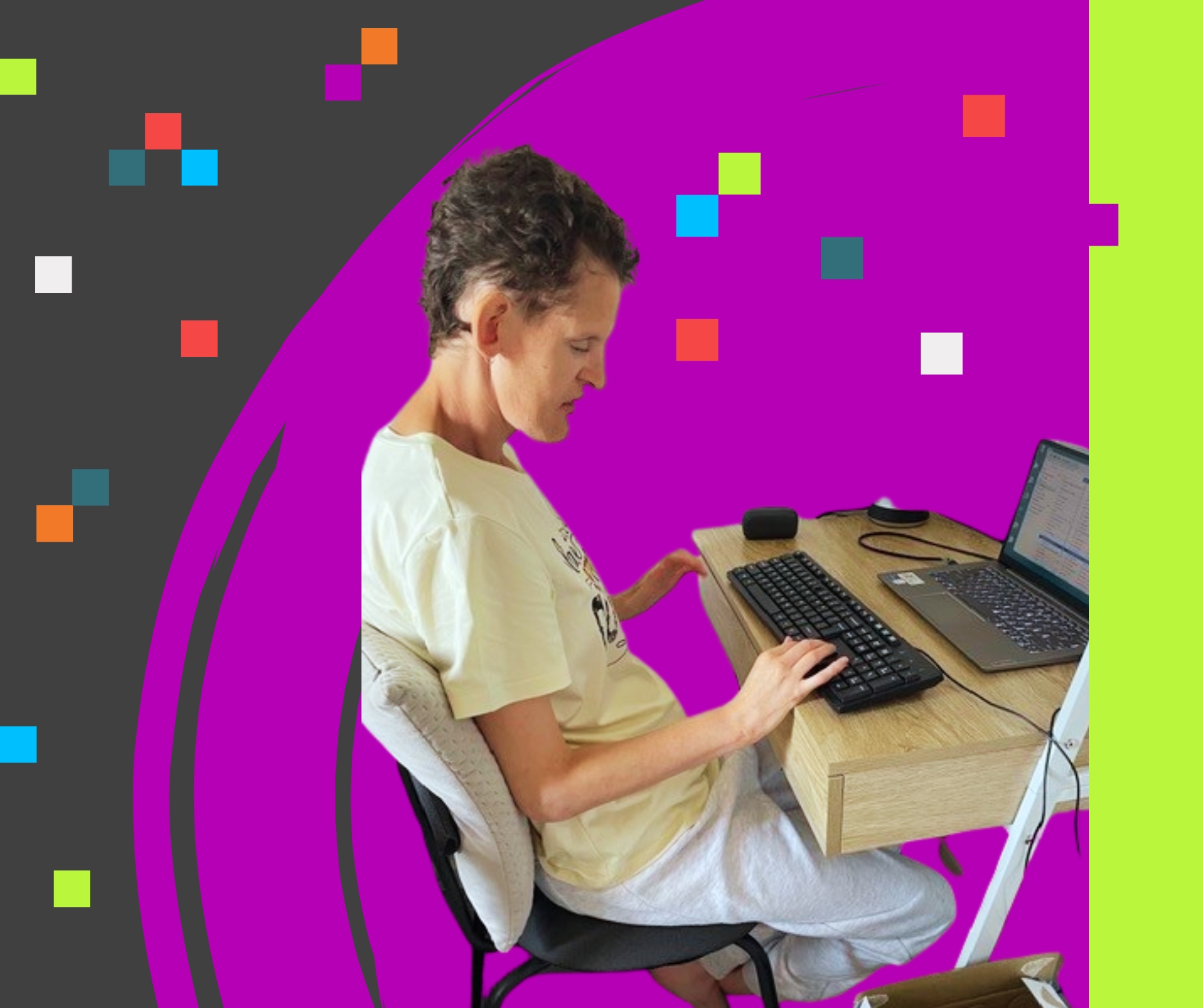
Tamara is 32 and lives in Harvey. She has been totally blind since the age of nine, after being born with cataracts and glaucoma. As a child, she underwent several surgeries, including a cornea graft, but these were ultimately unsuccessful in restoring her vision.
Since then, she has used assistive technology in her daily life, including a screen reader called JAWS, which allows her to navigate a computer independently.
Tamara has been connected with VisAbility for most of her life, first engaging with the organisation not long after her diagnosis – back when it was known as the Blind Association of Australia. Today, that support continues through Orientation and Mobility services, with her instructor Gillian visiting her in Harvey, as well as regular conversations with assistive technology specialist Ryan.
Recently, Tamara received a new laptop through the Centre for Accessibility Australia (CFA Australia) something she had been keen to access but wasn’t sure how to go about. The timing coincided with her starting something new: a radio show with Harvey Radio.
“I use it for emails, searching the web, Google, and listening to music,” she says. The laptop has also supported her training for the radio show, where she hopes to create a program focused more on music and less on talk. Having a reliable, up-to-date device has made that process easier.
Before receiving the new laptop, Tamara was using an older device that no longer met her needs. It struggled to connect to Wi-Fi, programs frequently crashed, and the outdated technology made it difficult to use.
“To have access to a laptop has meant so much. If I didn’t get it, I would’ve struggled,” she says. Alongside braille books and audiobooks, technology plays an important role in how she stays informed and connected.
Looking ahead, Tamara hopes to use her laptop to continue developing her radio skills, including recording her shows for training purposes. It also allows her to stay connected with others, research topics of interest, and keep learning.
For Tamara, access to technology is essential – particularly for people who are blind or with low vision. Without it, staying connected to family, friends and the wider community can become more difficult.