
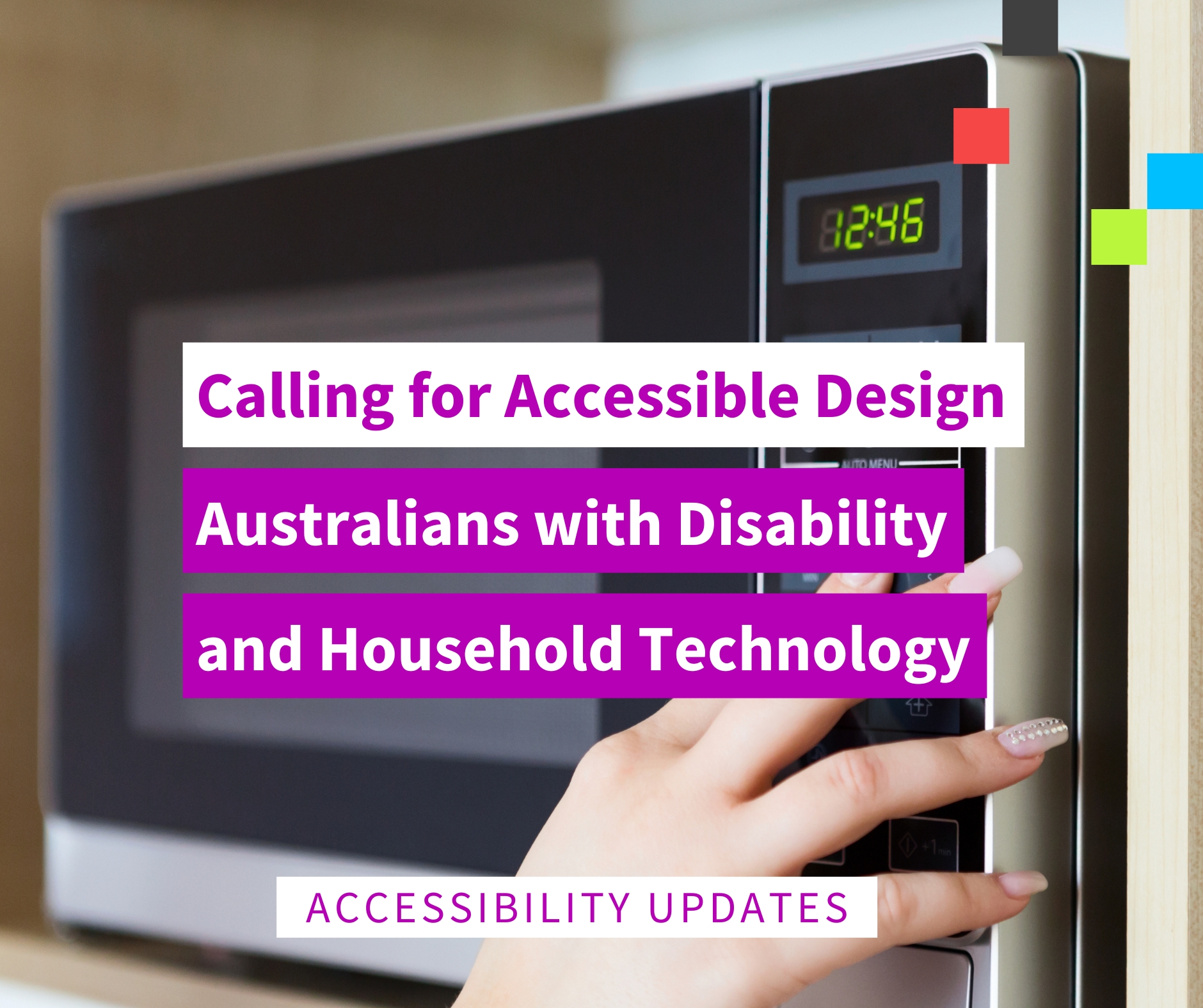
Modern technology is meant to make everyday life simpler, but for many Australians with disability, basic household appliances are becoming harder to use as accessibility is overlooked in product design.
ABC disability affairs reporter Nas Campanella recently highlighted the issue, describing how modern televisions, microwaves, washing machines and dishwashers have become difficult, and sometimes impossible, to operate as manufacturers move toward touchscreen and visual-only interfaces.
Campanella, who is blind, said she recently had to ask neighbours to come over and help her turn on a movie in her own home because her television and remote were inaccessible.
Like many people with low vision or blindness, Campanella said she has resorted to modifying appliances to make them usable, including placing sticky tape over microwave buttons so they can be identified by touch.
The issue extends beyond televisions and kitchen appliances.
Phoebe Jane, who is losing her central vision, told the ABC she can only use one setting on her coffee machine because the device relies heavily on inaccessible screen-based controls.z
The experiences reflect findings from a recent Vision Australia survey of 700 people who are blind or have low vision. More than half of respondents said advances in home appliance technology had made life more difficult, while more than 60 per cent said they had to modify appliances, avoid certain products, or rely on family members or carers to operate them.
For people with no vision at all, four in five respondents said they avoided using some appliances entirely.
Advocates say one of the major problems is that accessible solutions are being replaced by proprietary company-designed interfaces that often fail to consider accessibility.
There are currently no mandatory accessibility requirements in Australia for many household appliances or smart home technologies, meaning manufacturers can release products with touchscreen-only or heavily visual interfaces that are difficult for people with disability to use independently.
Accessibility organisations say they have seen companies replace accessible controls with custom interfaces for products such as air conditioners and other smart devices, resulting in accessibility being lost during the design process.
Chris Edwards from Vision Australia said appliances already needed to comply with strict safety standards and argued accessibility standards should also be introduced.
“We should not be in 2026 advocating for something for people to do basic functions within their home,” he told the ABC.
While some technology companies have developed accessible products, advocates say those options are often limited and far more expensive than standard devices.
At the same time, accessible alternatives do exist.
Streaming TV devices and smart TV boxes with built-in screen readers, spoken menus and voice guidance can improve accessibility for people who are blind or have low vision, even when the television itself is difficult to use.
Accessibility advocates say these examples prove that accessible design is achievable when manufacturers prioritise it from the outset.
Centre For Accessibility Australia (CFA Australia) provides support and guidance for people looking to improve accessibility in their home technology setup through its Device Setup resources.
As Australia’s population ages and more people experience changes in vision, hearing and mobility, disability advocates say accessible technology will become increasingly important for a growing number of Australians.
They argue accessibility should no longer be treated as an optional feature or specialist add-on, but as a standard part of modern product design.
To find out more, please read the ABC’s analysis on technology being inaccessible.